
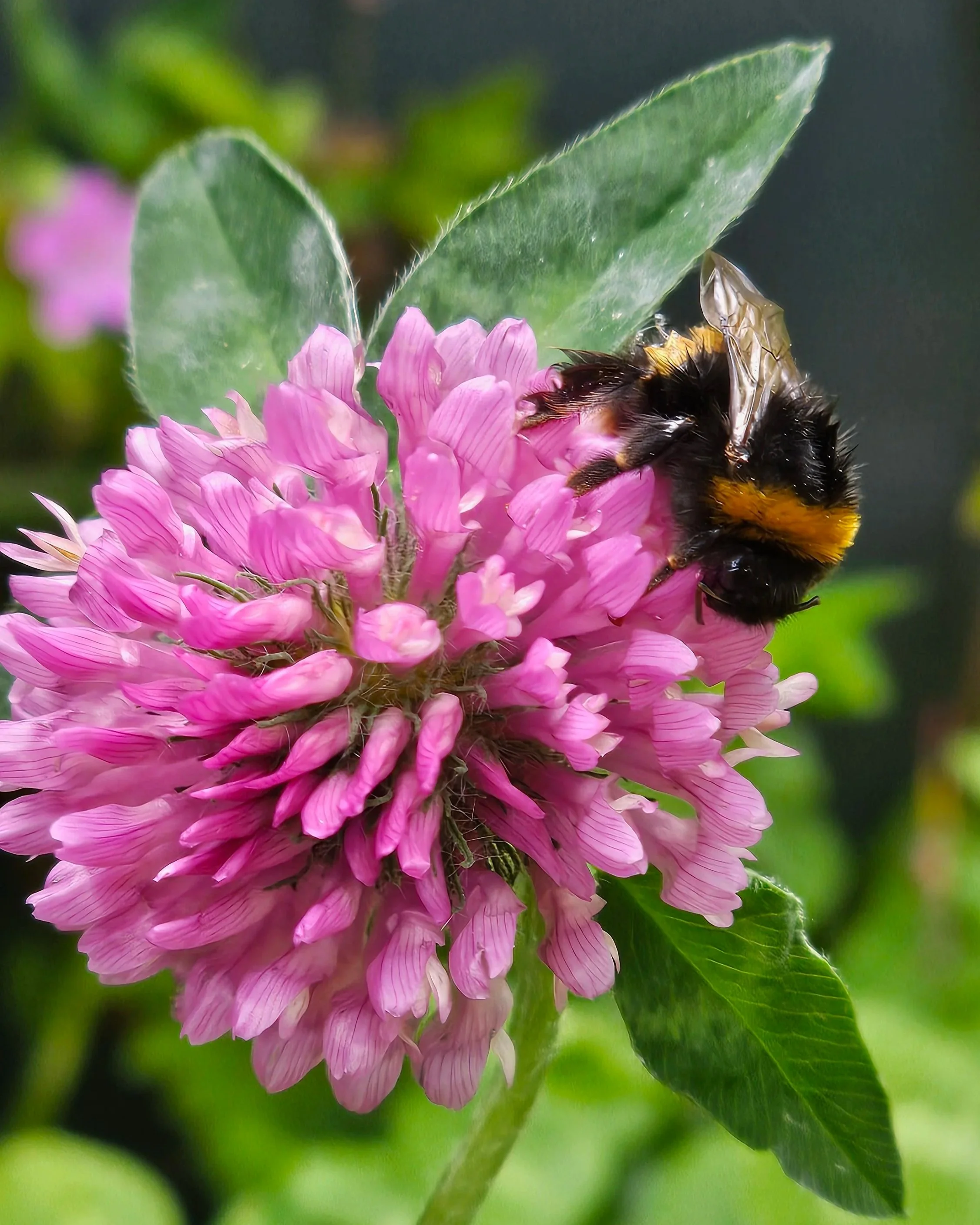


Red clover
Botanical name: Trifolium pratense
Folk names: Trefoil, marl grass, meadow trefoil, shamrock
Type: Perennial
Wildlife: Rich in high-quality pollen and nectar for longer-tongued Garden, Common Carder and Red-tailed bumblebees and butterflies. Caterpillar food for Marbled Clover, Mother Shipton and Burnet Companion moths. RSPB says woodpigeons may eat the leaves in colder months!
Flowers: June to August
Decorative merit: Pink or reddish-purple globose flowers 3cm long, forming oval clusters, held on hairy stems with grey-green, oval to elliptical leaves marked with a pale ‘V’. Grows in gently sprawling clumps. Nourishes the soil with nitrogen.
Where: Sun or part-shade. Borders, mini meadows, wilder patches or try in a container (one lady has had great success with this!). I’ve also planted in edges of vegetable beds on the allotment to help fix nitrogen into the soil. Slugs love the seedlings in wet weather so protect with copper rings.
Folklore: Said to promoting sleep and fertility. The four-leaf clover is seen as a powerful magical talisman. Flowers are used in herbal medicine (consult a qualified herbalist such as Honeysuckle Herbal).
Pea family relative of birdsfoot trefoil and white clover.
Donate seeds to Exeter Seed Bank