



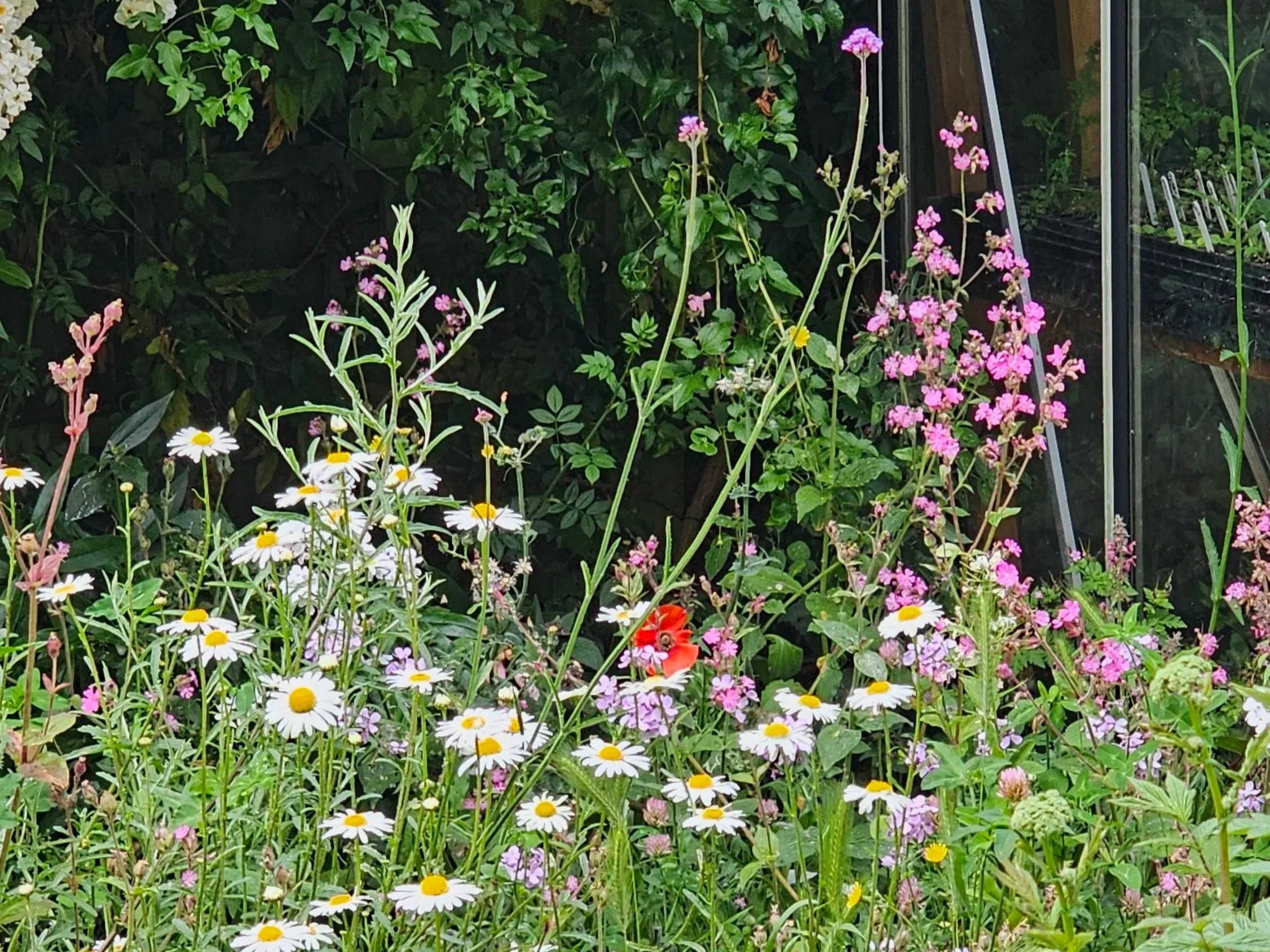
Ox-eye daisy
Botanical name: Leucanthemum vulgare
Folk names: Moon daisy, moonpenny
Type: Perennial
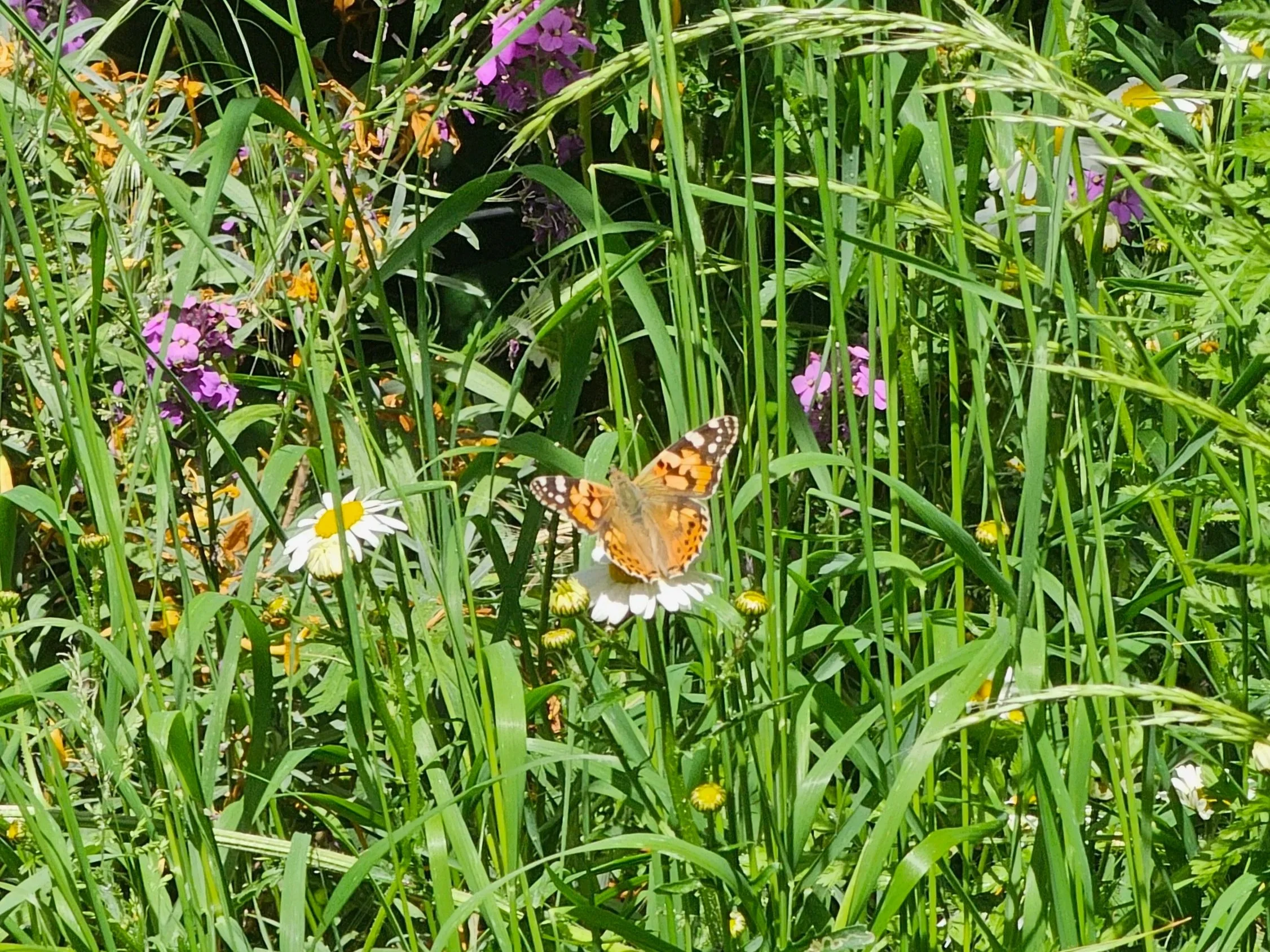
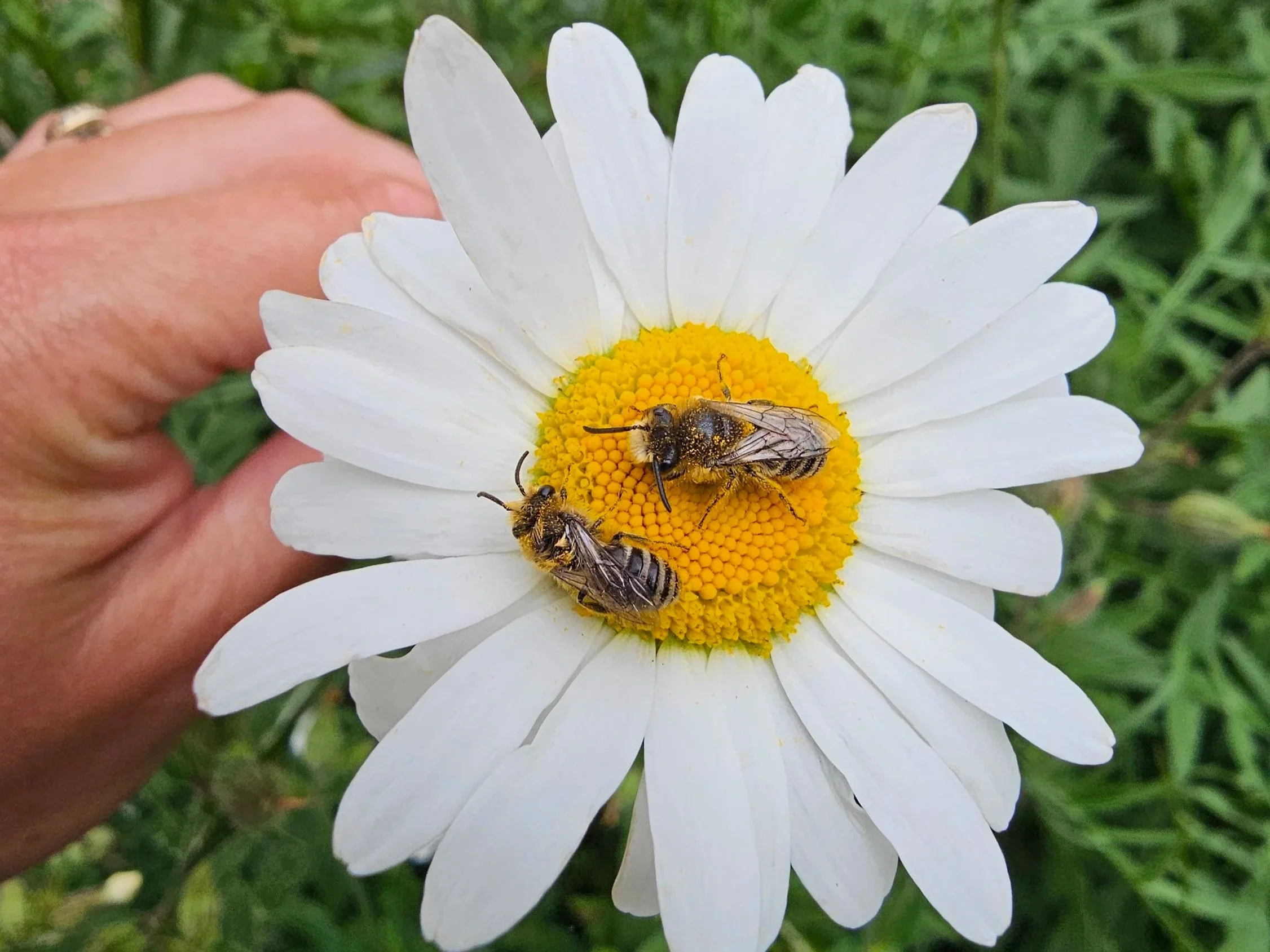
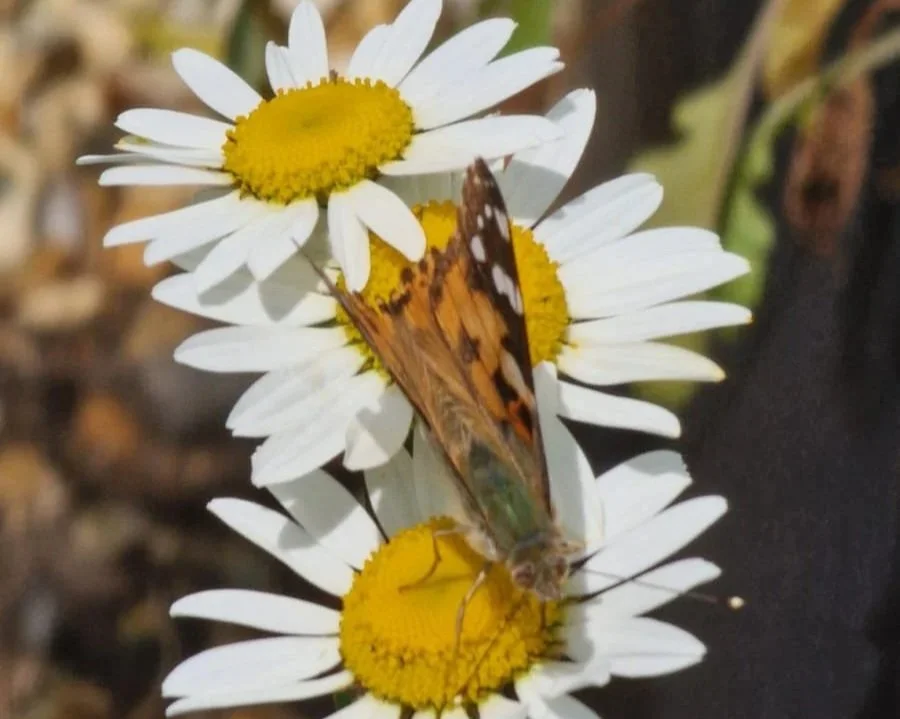
Wildlife: Open flower structure beloved by solitary bees including plasterer bees, soldier beetles and hoverflies that feed on the nectar, as well as ladybird larvae attracted to the aphids that nestle beneath the flower-heads. Painted Lady butterflies have been spotted feeding on them in my garden and on a plant finding a happy home in south Wales! Kate Bradbury says the petals may even be used by leaf-cutter bees to make their nest cells.
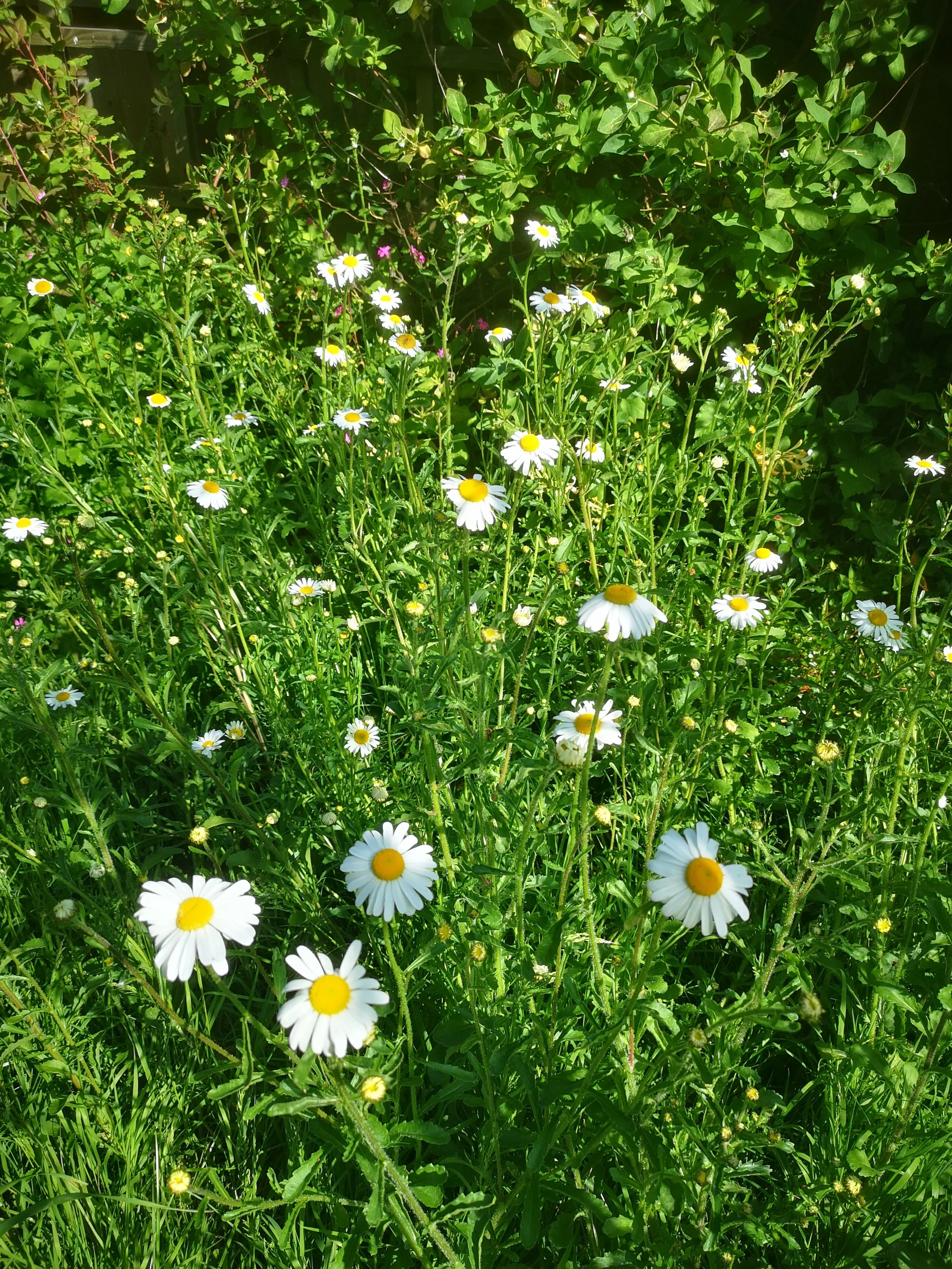
Decorative merit: White petals surrounding a bright yellow centre. Solitary heads 3-5cm wide on tall stems growing up to 60cm. Spreads by rhizomes and will form clumps, so brilliant for creating a quick meadow effect in a part of your lawn left to grow long or when starting a mini-meadow.
Flowers: May to July
Where: Sun or part-shade. Middle of border, mini meadow and wilder patches. As it’s a vigorous, drought-resistant plant that spreads, why not try it in a large container? One customer has done this and the flowers still continued into October. Kate Bradbury recently included ox-eye in her gravel garden.
Folklore: Flowers appear to glow in the evening. The petal-plucking game, 'He loves me; he loves me not', is thought to have started with the oxeye daisy. In Germany bunches of flowers used to be hung over barn doors to ward off lightning.
Daisy family relative of greater knapweed.
Donate seeds to Exeter Seed Bank